Speakometer vs Say It at a glance
The key difference is feedback type: automated phoneme-level analysis in Speakometer versus visual and audible self-comparison in Say It. “Not clearly documented” does not mean a feature is definitely absent.
| Criterion | Speakometer | Say It |
|---|---|---|
| Best for | Active pronunciation analysis and structured practice | Reference audio and manual self-review |
| British pronunciation | British Received Pronunciation model | British pronunciation dictionary and model recordings |
| American pronunciation | General American model | American pronunciation dictionary and model recordings |
| Automatic sound-level feedback | Color-coded IPA analysis identifies individual sounds | Not provided in the reviewed workflow; comparison is manual |
| Color-coded IPA feedback | Highlights accurate sounds and sounds needing practice | IPA is reference information, not automated learner feedback |
| Interactive IPA feedback sounds | Tap individual IPA sounds in the result to hear and compare the target sound | No equivalent feedback-sound control was observed; IPA is displayed as a reference |
| IPA and stress display | IPA integrated with assessment and word practice | Reference IPA, syllables and stress markers |
| Full IPA sound chart | Interactive vowel and consonant chart available free | Sound chart is visible; free access was limited to selected sound content in the reviewed version |
| Searchable words | 65,000+ words | 36,000+ entries for each British and American dictionary; wider access may require payment |
| Minimal pairs and contrasts | 8,000+ minimal pairs and sound contrasts | Comparable dedicated library not clearly documented |
| Individual sound practice | Interactive sounds, detailed guides, targeted words and contrasts | Vowel, diphthong and consonant sound browser; broader access may require payment |
| Sound formation guidance | Original illustrations and mouth and tongue-position guidance | Equivalent illustrated production guidance not clearly documented |
| Spelling patterns for sounds | Common patterns and example words | Equivalent spelling-pattern lessons not clearly documented |
| Model audio | British and American models | Oxford pronunciation recordings |
| Recorded self-playback | Hear the learner recording after assessment | Hear the learner recording for self-review |
| Model comparison | Play the learner recording beside the selected British or American model | Compare learner and reference model audio and visual patterns manually |
| Structured topic/category practice | Sounds, minimal pairs, endings, high-frequency and thematic vocabulary, and recommendations | Search, sounds, tests, games and word lists; less clearly organized as a progressive pronunciation path |
| Personalized recommendations | Based on language, results and history | Comparable automated system not clearly documented |
| Progress and history | Practice history and progress information | Progress summary observed; comparable detailed history not clearly documented |
| Platforms | iPhone, iPad and Android | iPhone and iPad; Android currently unavailable |
| Access model | Free download; optional Premium | Free sample access, trial and optional subscriptions or paid content |
How does pronunciation practice work in each app?
Speakometer's correction loop
- Choose British RP or General American.
- Listen to the model and pronounce the target.
- Receive instant color-coded IPA feedback.
- Identify the sound that needs work.
- Tap that IPA sound to hear its isolated pronunciation model.
- Review formation guidance, illustrations, spelling patterns or related sounds.
- Practice targeted words or minimal pairs.
- Listen to the learner recording beside the model, repeat and track progress.
Say It's self-comparison loop
- Search for or select a word.
- View IPA, syllables and stress information.
- Listen to the reference model and inspect its waveform.
- Record the pronunciation.
- Compare the recording with the reference audio and waveform manually.
Speakometer provides the more guided correction loop because it adds automatic analysis and targeted follow-up to the same basic record-and-compare process. Say It provides rich model information, but the learner decides which audible or visual difference matters and how to change it.
What is the difference between IPA feedback and waveform comparison?
Speakometer's color-coded IPA feedback is an automated pronunciation assessment. It maps the spoken attempt to individual IPA sounds, indicates which were accurate or need more practice and lets learners tap each result sound to hear its isolated reference model. Speakometer also preserves the manual comparison step by playing the learner recording beside the selected British or American model.
Say It displays reference IPA and visual representations of the model and learner audio. The learner can listen, move through the model slowly and compare the two patterns. Say It does not provide automated pronunciation feedback in the reviewed workflow.
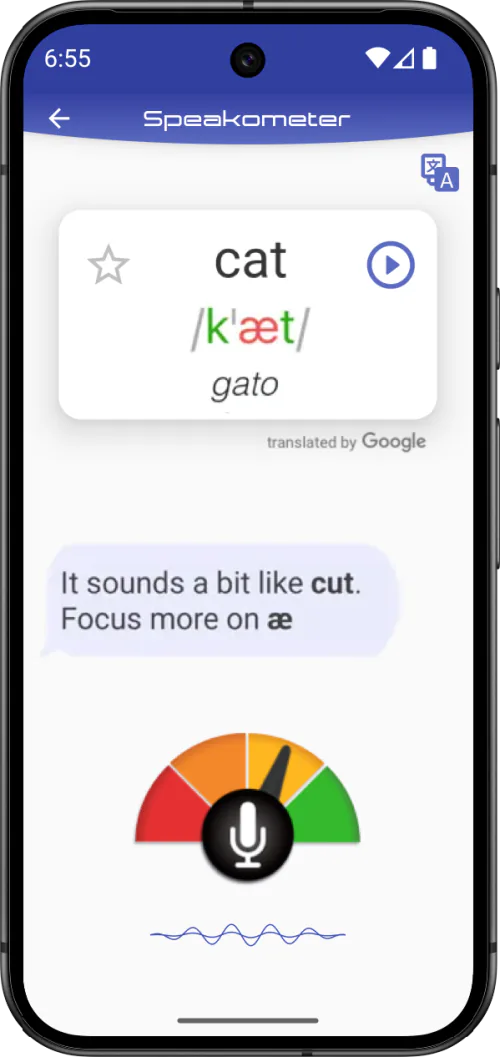
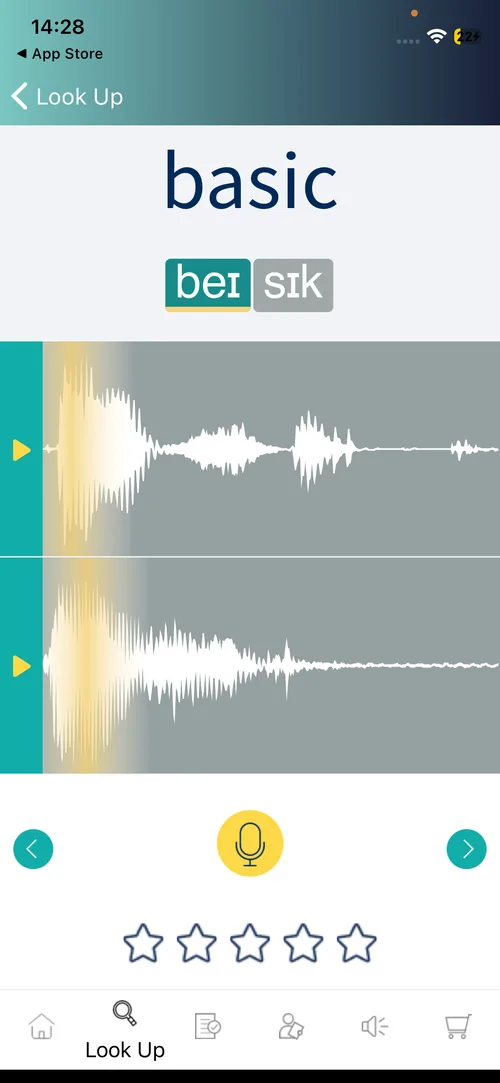
Say It's waveform is a distinctive visual self-review tool. It can be useful for learners who already know what to listen for, but it does not tell the learner which phoneme was pronounced correctly or incorrectly. Speakometer is more actionable when the learner wants the app to identify a specific sound and guide the next practice step.
Which app is better for practicing individual sounds?
Speakometer's full IPA sound chart is available free. It covers vowels and consonants with interactive model audio and links into detailed sound pages with original articulation illustrations, practical mouth and tongue-position guidance, spelling patterns, example words and related sound contrasts where applicable.
Say It includes a clean IPA sound browser for vowels, diphthongs and consonants. In the reviewed free experience, only a limited selection of sound content was accessible and broader content required paid access. We did not observe an equivalent detailed system for articulation illustrations, production guidance, spelling patterns or sound contrasts.
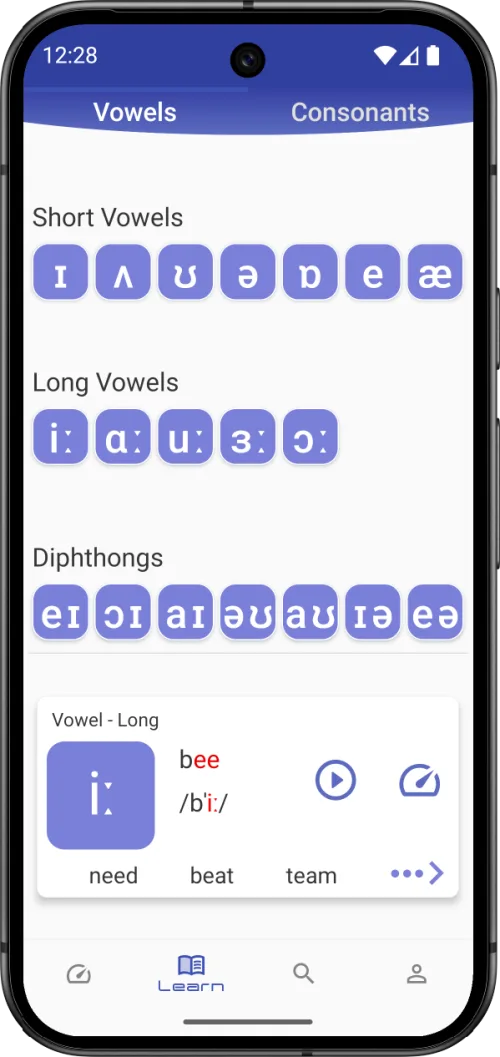
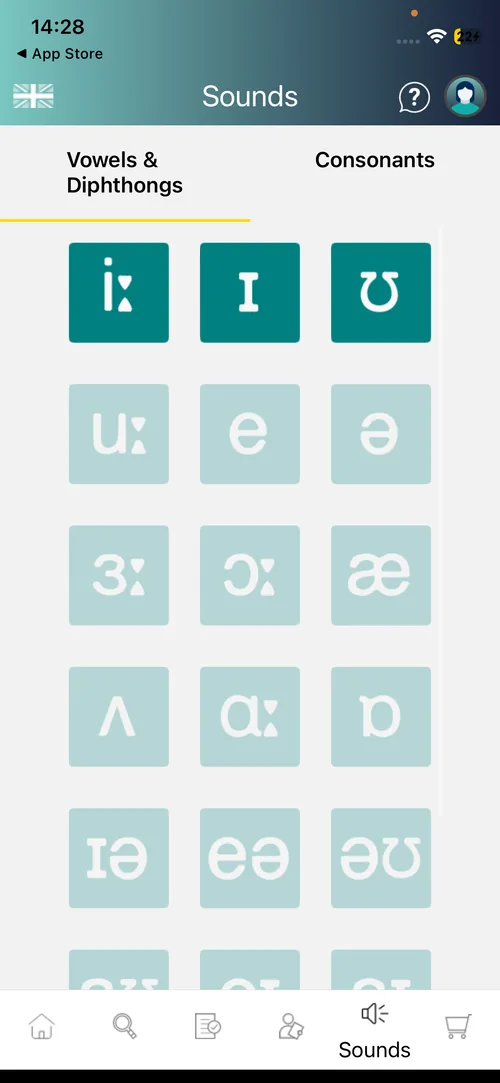
Choose Speakometer when you need a free full sound chart, guided production explanations and targeted contrast practice. Choose Say It when a clean visual and audio reference is the priority and the relevant content is available in your access tier.
Word practice, topics and content organization
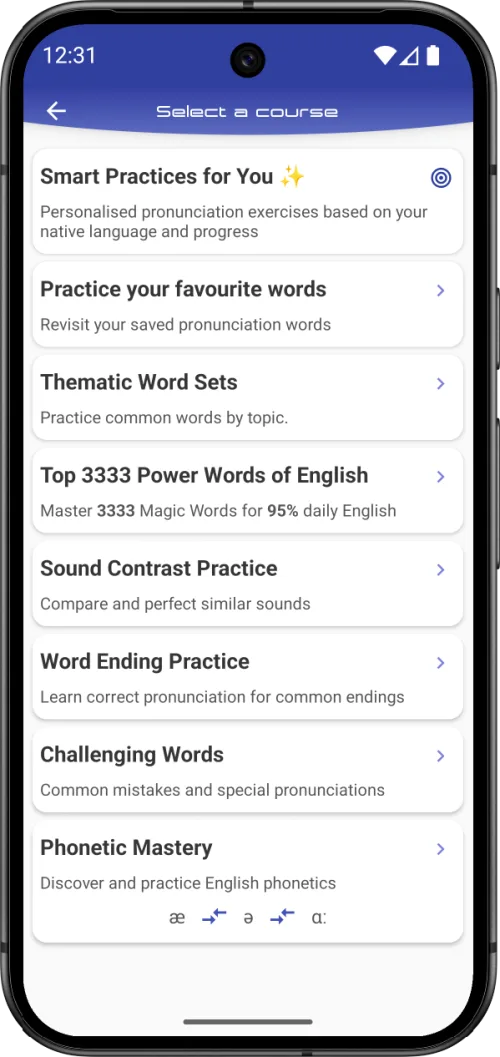
Speakometer documents more than 65,000 searchable words and provides multiple structured pronunciation paths: thematic vocabulary, high-frequency words, minimal pairs, individual sounds, challenging words, word endings and personalized recommendations.
Say It's current store listings document more than 36,000 entries in each British and American dictionary. It also provides sounds, tests, games, personal word lists and training content. The free version is sample-based, and wider dictionary or training access may require a trial, subscription or paid content.
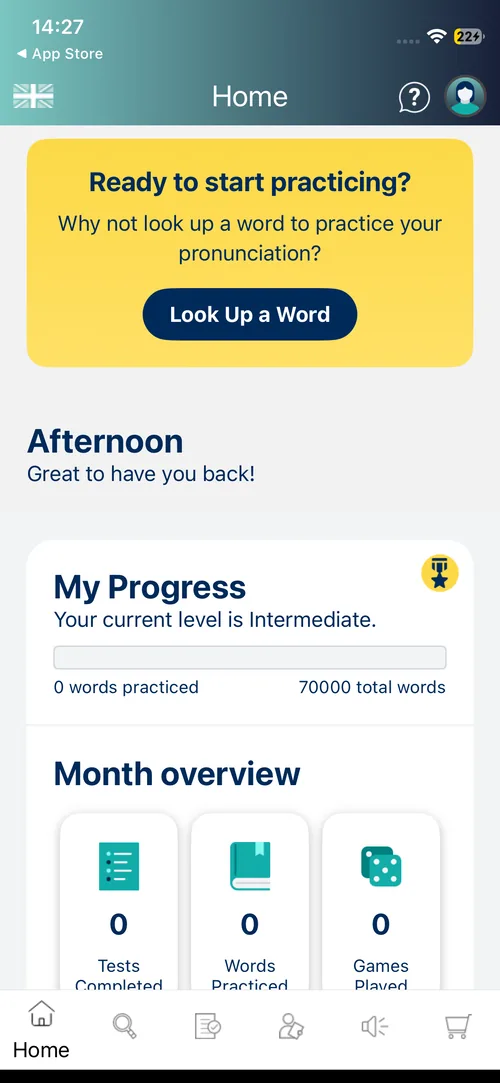
In the reviewed version, Say It's content is spread across word lookup, sounds, tests, games and lists rather than organized around the same kind of focused pronunciation progression used by Speakometer. Its home screen provides useful progress context, although a comparable automated recommendation system is not clearly documented.
British and American models, platforms and access
Speakometer supports British and American pronunciation on iPhone, iPad and Android. Say It provides separate British and American pronunciation dictionaries for iPhone and iPad. Its former Android listing is currently unavailable on Google Play.
The distinction is not the number of accents but what happens after listening: Speakometer assesses the attempt, while Say It supports manual comparison. The guide to choosing British or American pronunciation can help you select a consistent target.
Speakometer is free to download with optional Premium access. Say It provides sample access, advertises trial options and offers subscriptions or separate paid content. Current availability and payment terms can vary by platform, market and offer.
Strengths and limitations
Speakometer
Best for: active pronunciation correction and structured sound practice
Strengths
- Interactive color-coded IPA assessment with isolated playback for individual feedback sounds.
- Sound formation, spelling patterns and related-sound guidance.
- Large minimal-pair and searchable-word libraries.
- Personalized recommendations, history and progress.
- Recorded playback beside the selected British or American model.
Limitations
- Does not provide interactive waveform.
- Not a complete conversation or coach-led course.
- Corrected sounds still need transfer into phrases and spontaneous speech.
Say It: English Pronunciation
Best for: reference audio and manual self-review
Strengths
- Oxford recordings for British and American dictionaries.
- Interactive waveform visualization.
- Clear IPA, syllable and word-stress reference.
- Recording, slow model listening and manual comparison.
Limitations
- No automated, color-coded or phoneme-by-phoneme pronunciation feedback was observed.
- The learner must identify errors through listening and visual comparison.
- Comparable minimal-pair, articulation-guidance and spelling-pattern systems were not observed or clearly documented.
- Free IPA and sound access was limited in the reviewed version; broader content requires payment where offered.
- Content is less clearly structured around a focused pronunciation progression, and no comparable personalized recommendation system is documented.
Who should choose Speakometer or Say It?
Choose Speakometer if:
- You want the app to identify which IPA sound needs work.
- You need sound-formation guidance or spelling patterns.
- Minimal pairs and structured categories are priorities.
- You want recommendations and recorded model comparison in one loop.
Choose Say It if:
- Reference pronunciation recordings are your main priority.
- You understand how to compare visual audio patterns and prefer self-review.
- IPA, syllables and stress beside a word model are the priority.
- You want to share a recording with a teacher or colleague.
Speakometer is the stronger overall choice when correction needs to be specific and actionable. Say It remains distinctive when the learner already knows how to self-evaluate and wants reference audio plus an interactive visual display. For wider options, see the English pronunciation app comparison.
Frequently asked questions
Is Speakometer better than Say It?
Speakometer is better for active sound-level diagnosis, guided correction, minimal pairs and structured recommendations. Say It is better when reference recordings and visual self-comparison are the main priorities.
Does Say It give pronunciation feedback?
Say It provides IPA reference information, model audio, learner recording and visual comparison, but it does not provide automated pronunciation feedback in the reviewed workflow. Learners listen to their recording and compare it with the model themselves.
What is the difference between IPA feedback and waveform comparison?
IPA feedback identifies performance on individual speech sounds. A waveform visualizes audio over time, but the learner must interpret which visible or audible difference matters.
Which app is better for British and American pronunciation?
Both support British and American pronunciation, but in different ways. Speakometer assesses pronunciation against British RP or General American, while Say It provides British and American dictionaries with Oxford recordings for manual comparison.
Does Say It use Oxford pronunciation recordings?
Yes. Its current official store listings document Oxford model recordings for British and American pronunciation dictionaries.
How this comparison was prepared
The comparison focuses on feedback type, IPA, visual self-comparison, sound guidance, spelling patterns, searchable words, minimal pairs, recording, progress, accent models, platforms and access. It does not treat manual self-comparison as automated diagnosis.
Official product pages: Speakometer and Say It: English Pronunciation.
Product information was checked against current official pages and app-store listings on 8 August 2026. The supplied Say It screens were reviewed as hands-on evidence of the sound browser and its free-access state, word lookup, progress summary and manual comparison interface. Features, availability and subscription terms may change.
Final verdict
Speakometer is the stronger choice for learners who want active pronunciation correction and structured practice. It combines automatic color-coded IPA diagnosis, interactive sound playback, sound teaching, minimal pairs, searchable vocabulary, personalized recommendations and manual playback beside the selected model.
Say It stands out for its pronunciation recordings and interactive waveform view, but it is essentially a manual pronunciation self-comparison workflow rather than an automated pronunciation-feedback system. Choose it when those specialist reference and self-review tools matter more than guided diagnosis and follow-up practice.